UBC Applied Science leads $2.5M project to explore hydrogen heating for Vancouver campus
January 21, 2026
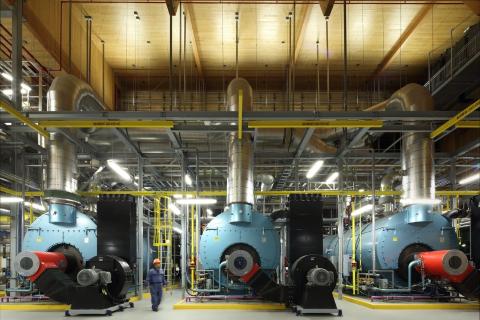
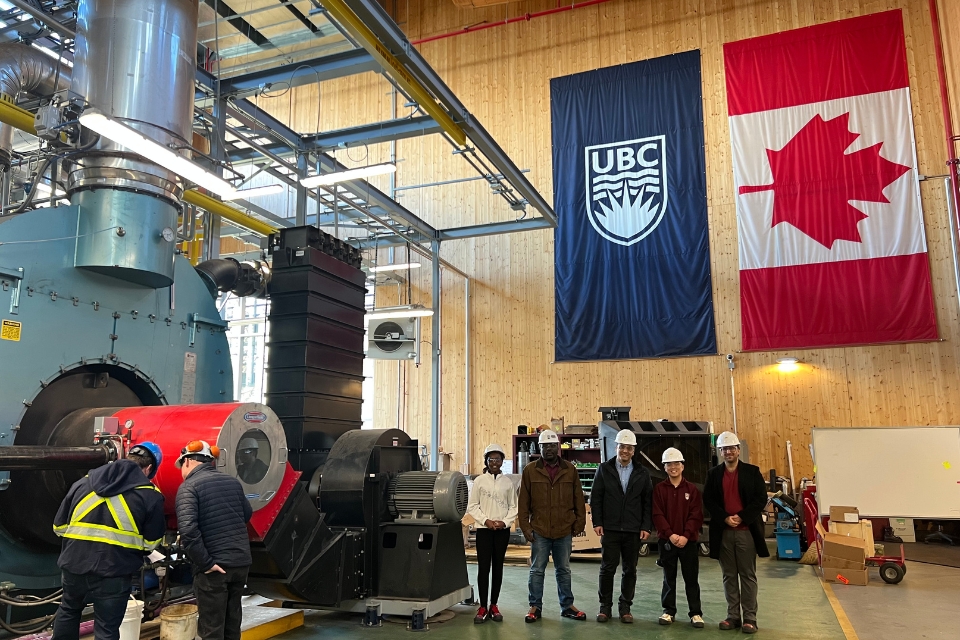
The UBC Campus Energy Centre (CEC) is essential for meeting the highest heating demands during cold weather on the Vancouver campus. The facility houses three massive hot water boilers that currently run on natural gas and renewable natural gas that generate up to 45 megawatts of thermal capacity, which accounts for approximately 86% of UBC’s total campus operational emissions.
Now, a three-year project led by Applied Science in collaboration with UBC Facilities is exploring whether those boilers could one day run entirely on hydrogen, a zero-carbon-emission fuel.
The initiative brings UBC Mechanical Engineering professor Dr. Walter Mérida and his MéridaLabs research team together with industry leaders FortisBC Energy Inc. (FortisBC) and Elomatic Consulting. The project also draws on the specialized expertise of facilities operators and researchers at the UBC Okanagan School of Engineering, reinforcing cross-campus collaboration.
The Campus as a Living Lab for lower carbon emissions
UBC embeds sustainability into every aspect of its operations, and this project will test next-generation lower carbon energy on existing infrastructure.
This research will explore innovative approaches to help address the university’s ambitious decarbonization and greenhouse gas (GHG) reduction targets. It will also build on UBC's proven record of hydrogen innovation, including the Smart Hydrogen Energy District (SHED), a groundbreaking project demonstrating hydrogen integration on campus.
"UBC’s 'Living Lab' concept means we use our campus infrastructure and operations to help solve global challenges," said John Metras, Associate Vice-President, UBC Facilities. "By collaborating on this study, and several other projects, we are providing a crucial, real-world test bed grounded in operational reality. This is key to charting the next phase of the university's ambitious decarbonization strategy."
"This research moves us beyond theory. We are using lab tests and advanced models to assess the safety and feasibility of integrating hydrogen into large commercial heating systems for other institutions in Canada and globally," added Dr. Mérida.
Bridging research, operations, and industry for real-world impact
This initiative is a powerful example of academic research and partnerships directly informing industry and public policy.
"This project’s real innovation lies in the unprecedented collaboration between the research and operational teams at UBC. Beyond professors, our teams include postdoctoral fellows, students and, critically, expert professionals who run the campus infrastructure daily,” said Dr. Mérida. “This ensures our findings are grounded in real-world safety, cybersecurity, efficiency optimization, and economic viability.”
FortisBC, is a critical energy provider delivering both gas and electricity to nearly 1.3 million customers across British Columbia. The company is supporting this research to help identify potential ways to lower emissions for large-scale heating systems and provide customers with solutions that meet energy needs now and into the future.
“This research has the potential to help us understand how emerging technologies like hydrogen could work in real-world applications,” stated Jamie King, Director, Innovation and Measurement, FortisBC. “The findings from this feasibility study will allow us to learn from UBC’s expertise and assess what could be possible for large-scale heating systems, while continuing to focus on delivering safe and reliable energy to British Columbians.”
Elomatic Consulting brings specialized engineering expertise to assess the modifications needed for the facility to safely handle hydrogen.
"Our focus is on the engineering reality: assessing the existing Campus Energy Centre and determining the precise modifications needed to safely transition the boilers to 100% hydrogen," commented Tero-Seppo Tuomela, SVP Business Development, Elomatic. "This project is vital because it moves the conversation from 'if' hydrogen can work in commercial facilities to 'how' it can be implemented responsibly."
Alignment with provincial climate goals
This research directly supports the BC Climate Change Accountability Act and the CleanBC roadmap by seeking viable alternatives to natural gas.
Widespread adoption of hydrogen in urban centers, where commercial boilers are common, could help support provincial greenhouse gas reduction goals and help minimize reliance on carbon-based energy sources.
The project, funded through contributions from FortisBC, Elomatic and UBC, is set to run for three years, delivering the data needed to guide the next phase of lower carbon heating solutions at UBC and beyond.